
Jennifer Rossmann | Racine Trauma & Somatic Therapist
For women ready to change how trauma still lives in their body and relationships.
You’ve made sense of the past. But it still shows up in the present.

You may understand where your patterns came from. But your body can still react before you have time to think.
A change in someone’s tone can send you into overdrive. Conflict may leave you shutting down, overexplaining, fixing, or questioning whether your reaction is “too much.”
If you’ve survived an emotionally abusive or unsafe relationship, part of you may still be scanning for signs that something is wrong—even when life is safer now.
You may also notice the people-pleasing, perfectionism, and tendency to put everyone else’s needs before your own.
You’ve talked through your past. You know these patterns make sense.
But you’re ready for the present to feel different.
I’ve built my work around helping women heal at a deeper level.
I’m Jennifer Rossmann, a Certified Brainspotting Therapist and founder of Rooted Counseling & Wellness. My work centers on trauma, somatic healing, and helping women move beyond simply understanding what happened to them.
This is the work I feel most connected to.
Brainspotting has become one of the central ways I work because I’ve seen how much can open up when a client no longer has to find the perfect words for what she is carrying. Becoming a Certified Brainspotting Therapist has allowed me to deepen that work through advanced training, consultation, and experience, so I can stay present with more complexity and help clients feel less rushed or alone in the process.
I continue to grow in this work because the women I serve often bring experiences that are layered, painful, and not easily reduced to a single story. That includes women healing from relationship trauma, sexual trauma, and clergy abuse through my work connected with the Wisconsin Department of Justice.
What matters most to me is that you feel there is room for all of it here.
My connection to this work is professional, but it is personal too-
I’ve spent my own seasons in therapy. I’ve raised my daughter as a single mother, navigated an emotionally abusive relationship, and known what it feels like to understand something intellectually while still carrying it in my body.
Finding somatic therapy and Brainspotting gave me a different kind of healing. It helped me feel more secure in my relationships, more confident in my choices, and less like therapy needed to be something I did forever.
That experience shaped the therapist I became.
What I love most about this work is witnessing a woman begin to trust herself again, feel more at home in her body, and move through life with greater confidence. It is an honor to be part of that process.
You don’t have to make the hard parts easier for me.
Trauma is rarely simple.
You may miss someone who hurt you. You may know a relationship was unsafe and still question yourself. You may deeply love your family while also carrying pain from what happened within it. I’m comfortable working in those complicated spaces.
You don’t have to come in knowing exactly what you feel, where to begin, or how to explain what is happening in your body. My role is to help us slow things down enough to notice what is there and make room for what has been difficult to reach.
Through Brainspotting, somatic therapy, and parts-informed work, we pay attention to more than the story. We notice the bracing, shutting down, activation, grief, anger, fear, or impulses that may still be living underneath it.
I don’t believe healing comes from forcing those responses away. I believe it comes from learning how to stay with them differently.

Some trauma work needs more space.
There are moments in therapy when you finally reach something important just as the session needs to end.
In the kind of work I do, that matters.
Brainspotting and somatic therapy ask us to slow down, notice what is happening in the body, stay with what emerges, and allow enough time for processing and integration. When we are working with deeper trauma, I don’t want the clock to become the reason we have to pull away from something your system is finally ready to work through.
That is why I primarily work with clients through extended sessions and Brainspotting Intensives.
The goal is not simply to spend more time in therapy. It is to create enough space for the work to unfold without rushing the process.
I take the investment you’re making in yourself seriously.
Choosing deeper therapy asks something of you. Your time. Your energy. Your vulnerability. Your willingness to look honestly at patterns that may have protected you for years—and, yes, a financial investment too.
I don’t take any of that lightly.
If you are showing up ready to do meaningful work, I want to meet you there with the same level of commitment. That means continuing to train, consult, challenge myself, and deepen the way I work so that our time together is not simply a place to talk about change, but a place where change can actually begin to take hold.
Why I Make More Time for Trauma Healing
I've learned through years of working with trauma that some of the most meaningful moments happen when we have the time to slow down and stay with what is unfolding.
Brainspotting allows us to access and process experiences that can be difficult to reach through words alone. But the work doesn't stop there. I also bring somatic therapy into our sessions, helping you notice what your body is experiencing, find steadiness when difficult emotions arise, and begin integrating what you've processed into how you feel and respond in everyday life.
That takes time. And I don't want you to feel rushed through the very experiences you've worked so hard to find the courage to face.
It's why I've intentionally built my work around extended sessions and Brainspotting Intensives.
I want us to have enough space to move through the difficult material, make sense of what has shifted, and help those changes begin to take root beyond our time together.
Extended Sessions | 75–90 Minutes
Extended sessions give us more room for ongoing trauma work while still maintaining the rhythm of regular therapy. We have time to talk, notice what is happening in your body, move into Brainspotting or somatic work, and allow the session to develop without needing to begin wrapping up just as something meaningful surfaces.
For many clients, that additional space makes it easier to go deeper while still feeling grounded when the session ends.
Brainspotting Intensives
Sometimes you don’t want to spend the next several months working on the same thing a little at a time. You may have one relationship, experience, trigger, or long-standing pattern that you feel ready to focus on—and you want the time to really stay with it rather than opening it up, stopping, and starting again the following week.
That is where I see Brainspotting Intensives being especially valuable. An Intensive gives us a dedicated day to focus deeply on what brought you in. Instead of repeatedly using part of each appointment to reconnect with the work and settle back into it, we can maintain the continuity your nervous system may need to keep processing.
It can also be a strong fit if weekly therapy simply doesn’t work for your life. You may have a demanding career, live farther away, already have a therapist you value, or simply prefer to invest your time in a more concentrated experience.
And the day is about more than several hours of Brainspotting. We have time to prepare for the work, move through the deeper processing, take intentional breaks, and then slow down again before you leave. I want you to walk away not only knowing what came up, but having had time to notice what shifted, make sense of what your body needs next, and begin connecting the work to the life you want to return to.
For some women, that focused day can create the kind of movement they have been waiting months—or even years—to reach.
Areas of Focus

Deeper processing for trauma, stuck patterns, and experiences that feel difficult to reach through talking alone.

Support for women healing from emotionally abusive relationships, domestic violence, sexual assault, and other forms of interpersonal trauma.

For women working through long-standing patterns shaped by early experiences, relationships, and survival.

For loss, relationship pain, abandonment, and the ways past attachment experiences continue to shape the present.

If We Were Grabbing Coffee I Would Tell You…
I have a slight obsession with plants - they are my happy place and I absolutely LOVE sharing this obsession with those around me (including my clients)
I have been a proud single mom for all of my daughter’s beautiful 18 years of life, I cannot wait to see what young adulthood has in store for her!
At home, you can usually find me with a cup of coffee (or matcha) and a good book - I have most recently been getting into historical fiction and always looking for recommendations.
I love spending time in nature, and that includes camping. I am most proud of my solo backpacking trip (with my daughter) around Isle Royale in Lake Superior.
I practice what I preach! Yoga and meditation are regular practices in my life that help keep me centered.
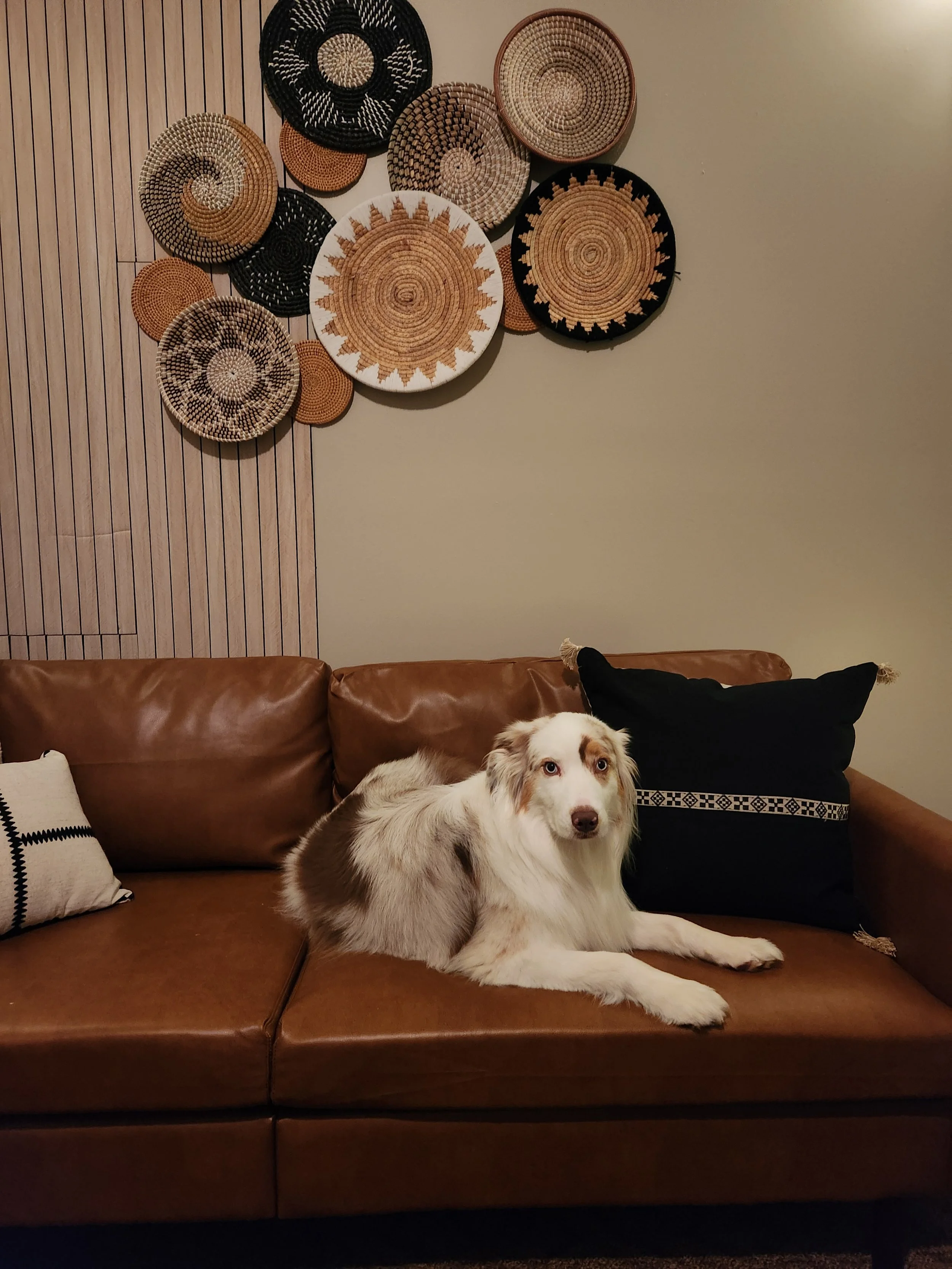
And you would probably hear about Sidney, my Australian Shepherd and certified therapy dog. She sometimes joins me in the office and has a way of knowing when someone needs a little extra grounding, a head rub, or simply some quiet company. She is always optional—and equally happy to nap nearby if you would rather have the space to yourself.
Frequently Asked Questions
-
Extended therapy sessions are $355 per session.
Brainspotting Intensives are $1,950 and include 6 total clinical hours.
-
When working with me, I primarily offer extended sessions and Brainspotting Intensives because I’ve found that more time gives us the space to combine conversation, somatic work, and Brainspotting without needing to stop just as deeper processing begins.
In some situations, including reduced-rate care, I may offer a traditional 50-minute session when it is the best fit for the client’s needs. The full fee cost for a standard 50-minute session with me is $235.
-
Rooted Counseling & Wellness is a private-pay practice and does not bill insurance directly. If you have out-of-network benefits, we can provide superbills and offer support through Thrizer to help you pursue possible reimbursement.
Reduced rates are also available through our Ethical Therapy Rates program for clients who are uninsured, underinsured, or facing financial or systemic barriers to care.
-
Extended sessions may be a good fit if you want ongoing therapy with more room for deeper trauma, somatic, and Brainspotting work.
A Brainspotting Intensive may be a better fit if there is a specific experience, relationship, trigger, or pattern you feel ready to focus on more deeply without spreading the work across weeks of appointments—or if weekly therapy simply does not fit your life.
We can talk through what you are hoping to work on and decide together which format feels most supportive.
Land Acknowledgment
I acknowledge that the land where I live and practice in Racine, Wisconsin, is part of the ancestral homelands of the Potawatomi, Ho-Chunk, and Menominee peoples. I honor their ancestors, elders, and communities, recognizing their enduring connection to these lands and waters.
My years working alongside Indigenous communities have deeply shaped my understanding of healing. I have been fortunate to learn from First Nations people about the importance of traditional healing practices, cultural identity, connection to community, and our relationship with the natural world.
I carry these lessons with gratitude and a responsibility to honor their origins, continue learning, and respect the sovereignty, traditions, and lived experiences of Indigenous peoples.
I invite you to learn more about Wisconsin's Indigenous nations through Wisconsin First Nations.
A Space Where Your Whole Self Is Welcome
Throughout my career, I've had the privilege of working with people from many different cultural backgrounds, and those relationships have shaped both the therapist I am and the way I understand healing.
I recognize that our experiences are shaped not only by our personal histories, but also by our culture, identity, community, and the systems we move through.
I'm committed to providing culturally responsive and trauma-informed care where your identity, values, and lived experiences are respected.
I also know that being an inclusive therapist requires more than good intentions. It asks me to remain curious, recognize my own blind spots, challenge assumptions, and continue learning from perspectives different from my own.
You should never have to leave parts of yourself at the door to feel welcome in therapy.